India’s Saudi Policy by P. R. Kumaraswamy & Md. Muddassir Quamar
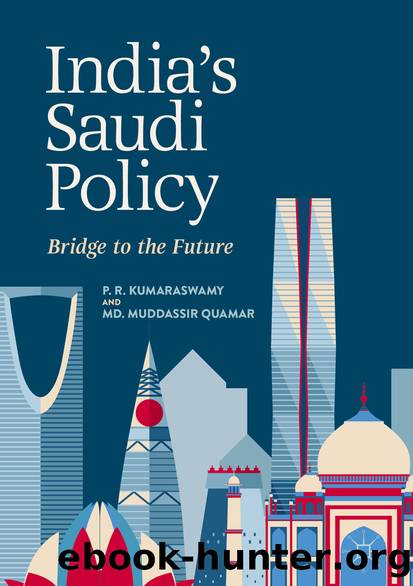
Author:P. R. Kumaraswamy & Md. Muddassir Quamar
Language: eng
Format: epub
ISBN: 9789811307942
Publisher: Springer Singapore
If the largest terror attack in history not only jolted the domestic confidence, the reaction of the Bush Administration precipitated the downward sliding of the American power, preponderance and international influence. The two ill-planned military campaigns in Afghanistan and Iraq proved to be costly both in human and in material terms and exposed the hollowness of the strategic thinking in Washington. Far from enhancing the American power, these interventions eroded its strategic influence and raised doubts over its decision-making process. The accusations of weapons of mass destructions levelled against Iraq in the United Nations proved to be false as intelligence assessments were tailored to the political demands of the Bush Administration.
The September 11 attacks also exposed the prolonged benign American approach towards religious extremism supported and propagated by its friends and allies. Under the ambit of energy security for itself and its European allies, various US administrations have adopted Nelson’s Eye policy towards the negative impact of Wahhabi Islam. The Afghan Arabs returning to their home countries in the early 1990s was not a wakeup call. At the same time, the American economy was jolted by the crisis in the aviation industry and the subprime mortgage crisis, eventually resulting in an economic recession from which the US had not recovered completely. Far from being a security threat, the September 11 dealt a devastating blow to the American economy, the raison d’être of the American pre-eminence after Second World War.
This declining American economic power and hence political influence manifested in the Middle East since 2001. Far from achieving any strategic gains, the US-led invasion of Iraq which began in March 2003 plunged the latter into a sectarian divide and endless cycle of violence. The removal and eventual execution of Saddam Hussein in December 2006 reopened the sectarian divide latent since the formation of the Iraqi state in 1932. The mounting American casualties and the cost of the campaign eventually forced President Bush to withdraw American military presence in that country, a process that was completed by his successor Barrack Obama in December 2011.
The post-2001 American policy resulted in two negative concerns in the region. The US intervention destroyed the post–Second World War Westphalian order in the Middle East and raised doubts about the viability of Iraq and in the process other states in the region. As would be discussed, these concerns were heightened in the wake of the Arab Spring protests. Moreover, the Operation Iraqi Freedom unveiled by President Bush transformed that country as the first Shia-majority Arab state in the political sense of the term. In the process, the US actions have emboldened the power and position of Iran, thereby rekindling the traditional Arab-Persian rivalry.
While trying to pull out the US forces from Afghanistan and Iraq, the Obama administration got itself estranged from its traditional ally Israel over the peace process. During his eight years in office, President Obama had to content with Benjamin Netanyahu as Israel’s prime minister; traditional bonhomie between the two leaders was absent, and they disagreed
Download
This site does not store any files on its server. We only index and link to content provided by other sites. Please contact the content providers to delete copyright contents if any and email us, we'll remove relevant links or contents immediately.
International Integration of the Brazilian Economy by Elias C. Grivoyannis(111449)
The Radium Girls by Kate Moore(12110)
Turbulence by E. J. Noyes(8141)
Nudge - Improving Decisions about Health, Wealth, and Happiness by Thaler Sunstein(7770)
The Black Swan by Nassim Nicholas Taleb(7217)
Rich Dad Poor Dad by Robert T. Kiyosaki(6770)
Pioneering Portfolio Management by David F. Swensen(6353)
Man-made Catastrophes and Risk Information Concealment by Dmitry Chernov & Didier Sornette(6155)
Zero to One by Peter Thiel(5889)
Secrecy World by Jake Bernstein(4819)
Millionaire: The Philanderer, Gambler, and Duelist Who Invented Modern Finance by Janet Gleeson(4548)
The Age of Surveillance Capitalism by Shoshana Zuboff(4372)
Skin in the Game by Nassim Nicholas Taleb(4319)
The Money Culture by Michael Lewis(4272)
Bullshit Jobs by David Graeber(4264)
Skin in the Game: Hidden Asymmetries in Daily Life by Nassim Nicholas Taleb(4069)
The Dhandho Investor by Mohnish Pabrai(3838)
The Wisdom of Finance by Mihir Desai(3805)
Blockchain Basics by Daniel Drescher(3650)
